
Dr. Viddulata Jagtap
Senior Dentist
We all want that "movie star" smile. Scroll through Instagram, and you’ll see influencers promoting everything from charcoal powders to blue light kits, promising you sparkling white teeth in minutes.
But as a dentist at Shriyan Dental Clinic, the most common concern I hear isn't about the cost—it’s about safety. Patients often ask: "Doctor, I want white teeth, but I heard whitening strips will ruin my enamel. Is that true?"
It is a valid concern. Your enamel (the outer layer of your tooth) is the hardest substance in the human body, but once it’s gone, it’s gone. It doesn't grow back. So, let’s separate the internet myths from the medical facts.
First, How Does Whitening Actually Work?
To understand safety, you need to understand the chemistry. Teeth whitening uses active ingredients (usually hydrogen peroxide or carbamide peroxide) that penetrate the enamel to reach the discolored molecules inside your tooth.
Think of it like a deep-clean for the pores of your teeth. The oxygen molecules from the whitening agent react with the discolored molecules, breaking the bonds that hold them together. The result? A brighter, whiter smile.
The Big Question: Does it Damage Enamel?
The short answer: No.
The long answer: Professional teeth whitening, when done under the supervision of a dentist, does not damage or thin your enamel.
Extensive research and clinical studies have shown that using high-quality whitening products is safe. We aren't "stripping" a layer of your tooth away; we are simply cleaning out the stains embedded within it.
However... Not All Whitening is Safe (The Danger Zone)
This is where the confusion comes from. While professional whitening is safe, many DIY methods can be dangerous.
- The "Charcoal" Trend: Many patients use charcoal toothpaste or baking soda. Be careful—these are abrasive. Instead of chemically lifting the stain, they physically scratch the surface of your enamel, which can eventually make teeth look yellow as the dentin shows through.
- Over-the-Counter Strips: Store-bought strips aren't "custom-fitted." The bleaching gel can leak onto your gums, causing chemical burns or severe irritation.
Professional vs. Store-Bought: What’s the Difference?
Why should you see a dentist instead of buying a kit online?
- Custom Protection: At Shriyan Dental Clinic, we protect your gums before applying any gel. We create custom trays that fit your teeth perfectly.
- Controlled Strength: We use stronger, more effective concentrations than store kits, but we monitor you to ensure safety.
- Desensitizers: We use products containing desensitizing agents like potassium nitrate to keep you comfortable.
We see many patients from Mundhwa and surrounding areas who tried online kits and ended up with burnt gums—don't let that be you!
"But Will My Teeth Hurt?"
Sensitivity is a common side effect, but it is temporary. When we whiten teeth, the "pores" of the enamel open slightly, causing sensitivity to cold for 12-24 hours. This is not damage. We recommend a desensitizing toothpaste, and teeth return to normal quickly.
The Bottom Line
If you have healthy teeth and gums, whitening is one of the safest ways to dramatically improve your smile. However, if you have cavities or gum disease, a pre-whitening checkup is non-negotiable.
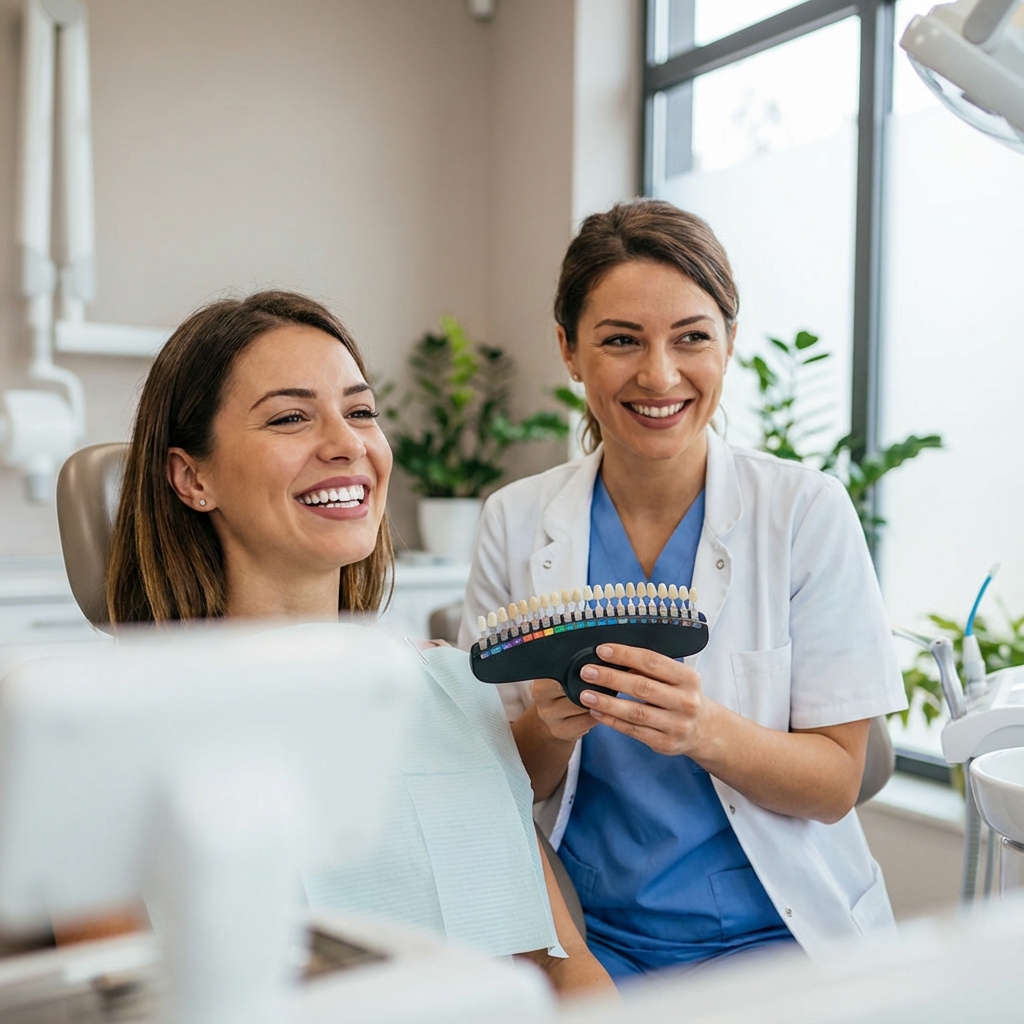
Want to brighten your smile safely? Don't guess with your enamel. Stop by Mundhwa, Pune for a consultation. Let’s decide which whitening shade is perfect for you.
Want to brighten your smile safely? Don't guess with your enamel. Stop by Mundhwa, Pune for a consultation. Let’s decide which whitening shade is perfect for you.